
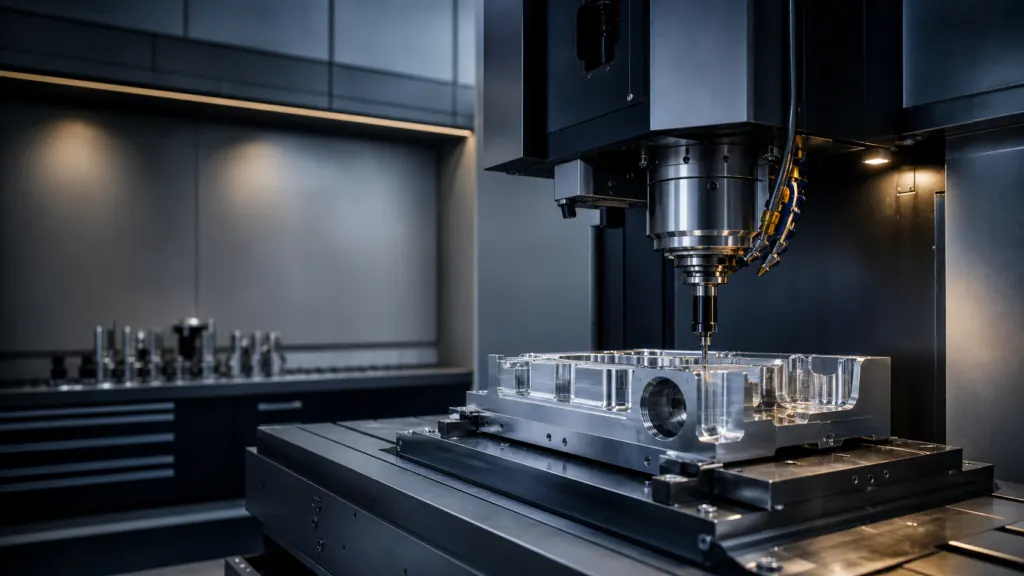
A practical introduction to CNC machines, their components and the production processes they support.
Introduction
CNC (Computer Numerical Control) machines have transformed the manufacturing landscape, offering unparalleled precision, efficiency, and versatility. These machines are essential for modern manufacturing, enabling businesses to produce complex parts with high accuracy and consistency. In this article, we explore the key features and benefits of CNC machines for manufacturers.
Key Features of CNC Machines
Modern CNC equipment combines computer control, precision mechanics and software to turn a digital design into repeatable production. The following features make it useful across many manufacturing environments.
1. Precision and accuracy
CNC machines work to very tight tolerance levels and can repeat the same movement many times with minimal variation. This reduces rejects and makes it easier to maintain consistent quality across a production batch.
2. Versatility
Multi-axis machining allows a single machine to reach complex geometries from different directions. CNC equipment can also process a wide range of materials, including wood, plastics, non-ferrous metals and steel, when configured correctly.
3. Automation and efficiency
Once a program has been verified, the machine can perform the same operation with limited manual intervention. Automation reduces the risk of human error, while faster production cycles help manufacturers increase output without compromising repeatability.
4. Advanced control systems
CAD/CAM integration makes it possible to move from a digital design to a production program efficiently. Real-time monitoring and machine diagnostics also help operators identify interruptions, wear or incorrect settings sooner.
5. Customisation and flexibility
Quick changeovers and custom tooling allow one machine to support different products and materials. This is particularly valuable for manufacturers producing short runs, prototypes or customised components.
Benefits for manufacturers
The main business benefits are lower labour costs, better material efficiency, consistent product quality and faster production cycles. CNC machines also support complex designs that would be difficult or impossible to produce manually.
Because production is programmable, manufacturers can scale output and respond to changing orders without rebuilding the entire process. Automated checks and controlled operation can additionally improve operator safety and reduce avoidable errors.
Conclusion
CNC machines combine precision, versatility and automation in a single production system. For manufacturers, choosing the right working area, tooling, control system and service partner is essential to turn those capabilities into a reliable return on investment.