Laser welders
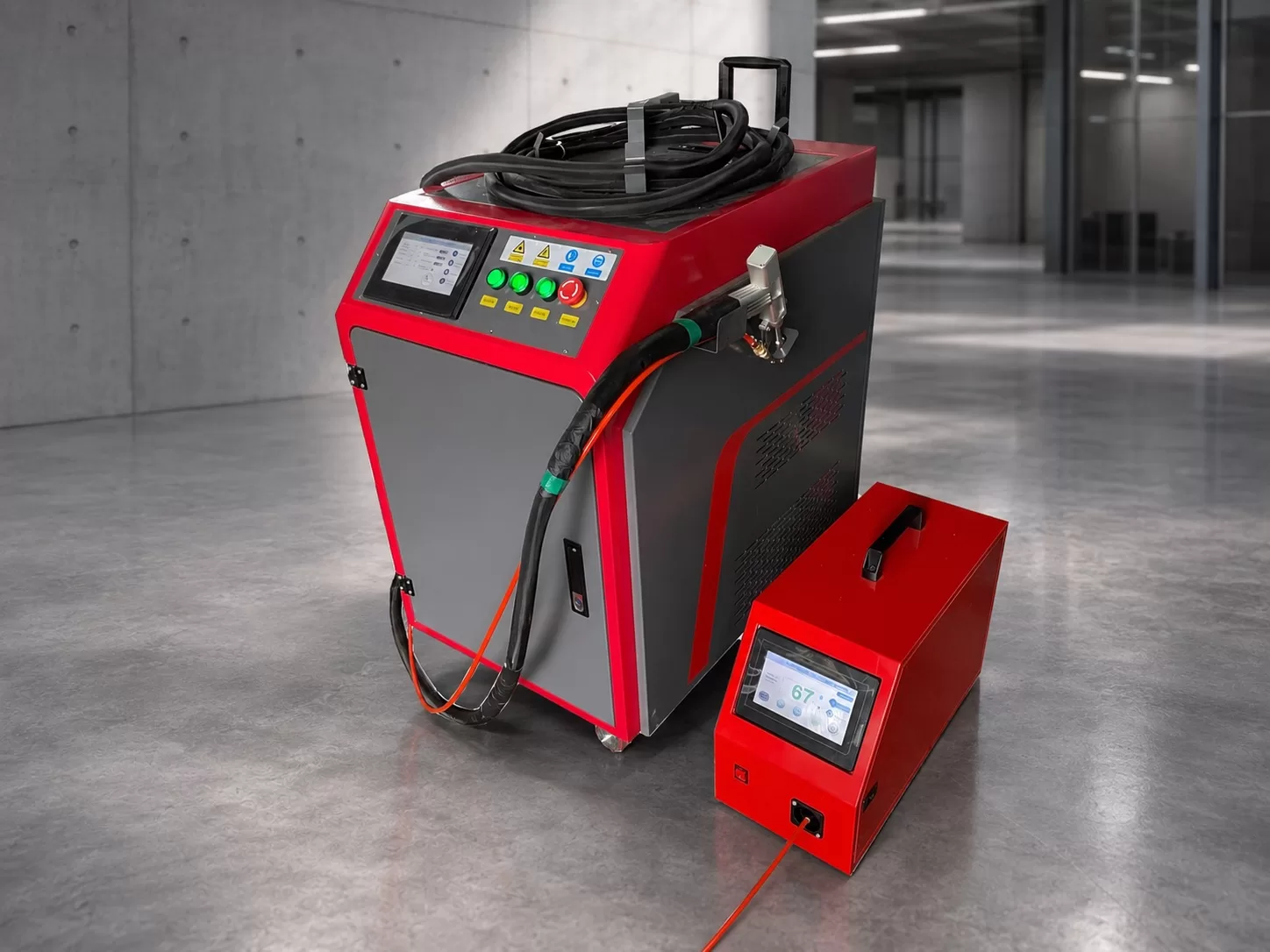
A laser welder joins metal with a laser beam instead of an electric arc: the weld is narrow and the heat-affected zone minimal. Roboteus supplies the RBW 1500, a Raycus 1500 W fiber source for mild steel, stainless steel and aluminium.
What laser welding gives you
The beam puts energy into a narrow band of material, so less metal around the weld heats up than with TIG or MIG. A smaller heat-affected zone means less distortion in thin sheet, less discolouration and less grinding afterwards.
The catalogue describes RBW 1500 exactly that way: laser welding of metal with high quality control and a minimal heat-affected zone. Materials: mild steel, stainless steel and aluminium.
Laser welder price - what moves it
The source and head are only part of the cost. Source power, wire feed, shielding gas, the eye protection required and the way the cell is enclosed all move the budget, so the quote is built around a process rather than lifted from a price list.
The other side is worth counting too: a shorter weld cycle and less finishing work change the cost per part, not just the purchase figure.
When laser, when a conventional welder
Laser welding is ahead on thin sheet, on stainless where the weld has to look right, and anywhere post-weld distortion would have to be straightened out. On heavy, full-penetration structural welds conventional methods are often the sensible choice.
If the welding is meant to run automatically, look at the industrial robots too - the catalogue links RBW 1500 with the six-axis RBR 0805.
Laser welding - frequently asked questions
How much does a laser welder cost?
We do not publish a catalogue price for RBW 1500 - the cell configuration moves the figure too much. Tell us the material, the thickness and the number of welds per shift and we will quote that process.
What power for what thickness?
RBW 1500 runs a 1500 W source. Power sets the maximum thickness welded in a single pass and the travel speed. We confirm the range for your material before quoting - thickness and grade change the answer more than the wattage alone.
How does laser welding differ from TIG?
TIG melts the material with an electric arc and heats a wide area around the weld. A laser delivers energy to a point, so the weld is narrower and the metal beside it stays cooler. In practice: less distortion and less grinding, at a higher machine price.
Does a laser welder weld aluminium?
Yes - aluminium is listed in the RBW 1500 specification alongside mild and stainless steel.